Breaking Barriers: Google PaLM 2
Redefining Language and Igniting AI Innovation

Google PaLM 2 is a next-generation large language model (LLM) developed by Google AI. It is a significant improvement over its predecessor, PaLM, and is capable of performing a wide range of tasks, including:
Natural language understanding and generation
Code generation and debugging
Translation between languages
Reasoning and problem-solving
Summarization and writing
Creativity and art
PaLM 2 is still under development, but it has already been used to power several Google products, including Bard, the company's new conversational AI assistant. It is also being used to develop new AI-powered tools and services that will make it easier for people to use computers and the internet.
Here is a more detailed overview of Google PaLM 2, including its capabilities, limitations, and potential impact on the future of AI:
What is Google PaLM 2?
Google PaLM 2 is a neural network model trained on a massive dataset of text and code. The dataset includes text from books, articles, code repositories, and other sources. The model is trained to predict the next word in a sequence, given the previous words. This training process allows the model to learn the statistical relationships between words and phrases.
How does Google PaLM 2 work?
PaLM 2 is a transformer-based language model. Transformers are a type of neural network that is well-suited for natural language processing tasks. They work by learning to predict the next word in a sequence, given the previous words. This allows them to learn the statistical relationships between words and phrases.
What are the capabilities of Google PaLM 2?
PaLM 2 is a very powerful language model. It can perform a wide range of tasks, including:
Natural language understanding: PaLM 2 can understand the meaning of text and code. It can answer questions, translate languages, and summarize the text.
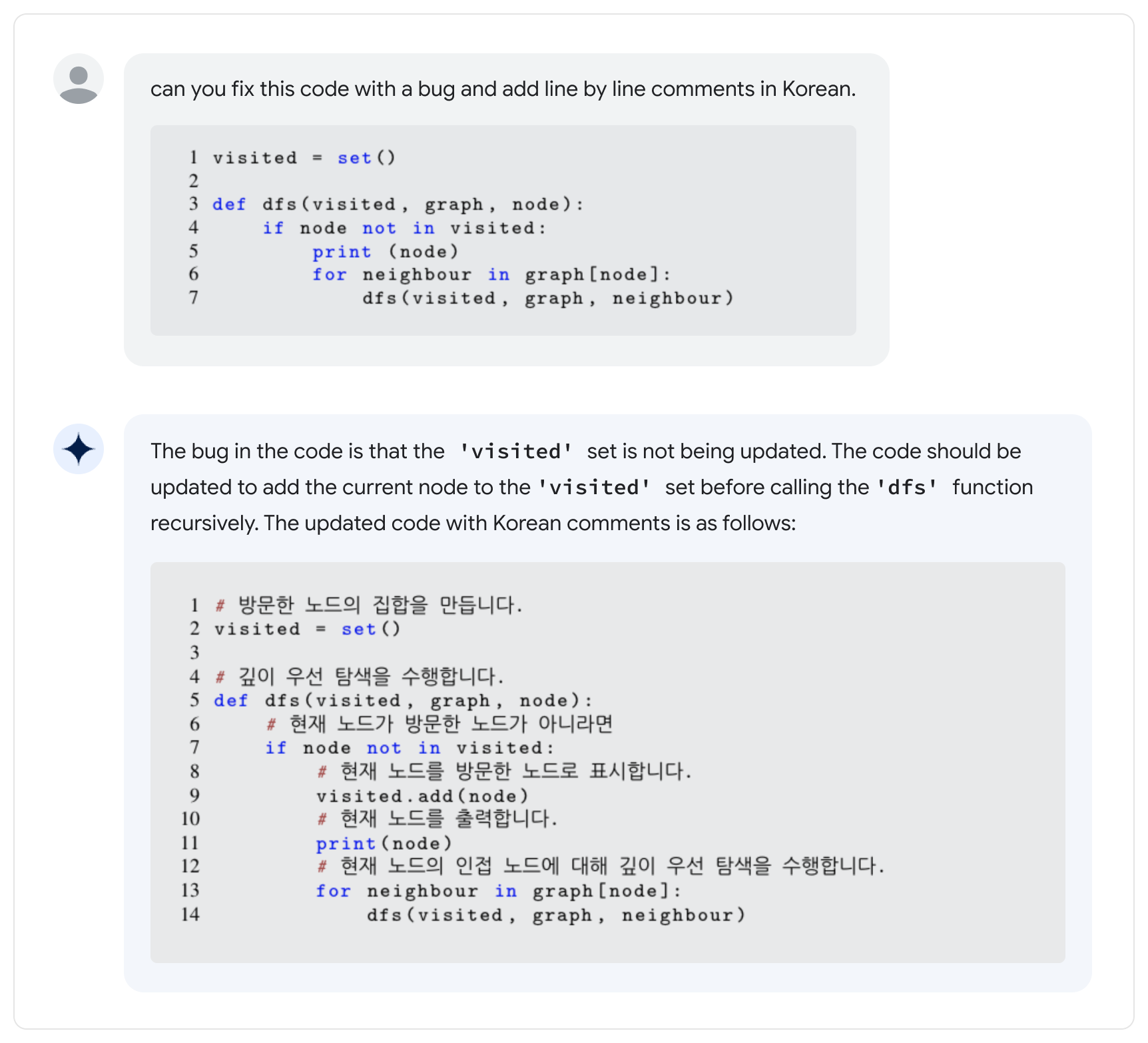
Code generation: PaLM 2 can generate code in a variety of programming languages. It can write code that solves problems, implements algorithms, and creates new software applications.
Translation: PaLM 2 can translate text between languages. It can translate text accurately and fluently, even in complex and technical domains.
Reasoning and problem-solving: PaLM 2 can reason about the world and solve problems. It can use its knowledge of the world to answer questions, make predictions, and generate creative text formats.
Summarization and writing: PaLM 2 can summarize text and write different kinds of creative content. It can summarize news articles, write blog posts, and even create poems and stories.
Creativity and art: PaLM 2 can generate creative text formats, like poems, code, scripts, musical pieces, emails, letters, etc. It can also generate images and other forms of art.

What are the limitations of Google PaLM 2?
PaLM 2 is still under development, so it has some limitations. For example, it can sometimes make mistakes, especially when it is asked to perform tasks that it has not been trained on. It is also not always able to understand the nuances of human language.
What is the potential impact of Google PaLM 2 on the future of AI?
PaLM 2 is a powerful new tool that has the potential to revolutionize the way we interact with computers. It could be used to develop new AI-powered applications that make our lives easier and more productive. For example, it could be used to develop new virtual assistants that can understand our natural language and help us with tasks like scheduling appointments, making reservations, and finding information.
PaLM 2 could also be used to develop new AI-powered tools that help us to learn and create. For example, it could be used to develop new educational tools that help us to learn new languages and subjects. It could also be used to develop new creative tools that help us to write, compose music, and design art.
Overall, PaLM 2 is a significant step forward in the development of AI. It is a powerful new tool that has the potential to revolutionize the way we interact with computers.
Here are some specific examples of how PaLM 2 could be used to improve our lives:
PaLM 2 could be used to develop new virtual assistants that can understand our natural language and help us with tasks like scheduling appointments, making reservations, and finding information. For example, PaLM 2 could be used to develop a virtual assistant that can understand our natural language and help us to book a flight or make a restaurant reservation. PaLM 2 could also be used to develop a virtual assistant that can help us to learn new things, like a language or a new skill.
**PaLM 2 could be used to develop personalized learning experiences for students. For example, PaLM 2 could be used to create adaptive learning materials that are tailored to each student's individual needs and learning styles. PaLM 2 could also be used to provide students with real-time feedback on their work, helping them to identify and correct their mistakes.


